
Turning Invasive Weeds Into Livelihoods
In the lush grasslands of India, a silent struggle is unfolding — one that doesn’t involve poachers, but plants. For years, invasive species like water hyacinth have been clogging the waterways and overtaking the native grasses that greater one-horned rhinos need to survive. Water hyacinth is considered one of the world’s most invasive aquatic weeds, altering ecosystems by suffocating other organisms. Left unchecked, these invaders don’t just take up space; they destroy the grazing grounds or “rhino lawns” and vital water sources that rhinos rely on for food and wallowing.
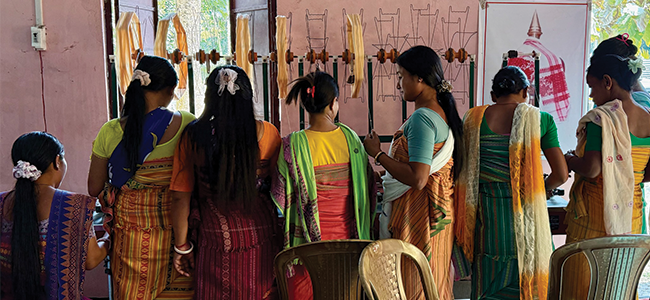
But in India, IRF and our friends at Aaranyak are helping turn this threat into a solution through community-led conservation. We support local women artisans by providing tools and training to harvest invasive water hyacinth and turn it into beautiful, sustainable goods, such as baskets, dining mats, vases and purses. IRF recently partnered with Aaranyak and the Kaziranga National Park and Tiger Reserve to open two new handicraft production centers near Assam’s Laokhowa-Burhachapori Wildlife Sanctuary, providing workspaces and income opportunities for female artisans living on the fringes of this vital rhino habitat.
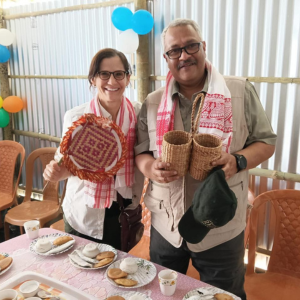
These facilities were officially inaugurated in the presence of Dr. Sonali Ghosh, Director of Kaziranga Tiger Reserve; Nina Fascione, Executive Director of International Rhino Foundation; Rahul Dutta, Intelligence Specialist at the International Rhino Foundation; Dr. Deba Kumar Dutta and Arif Hussain, senior officials of Aaranyak; Sabrina Begum, Member of Aaranyak and Anjuma Begum, Master Trainer.
Programs like this help protect the habitat and also secure steady income for the artisans, strengthening positive socio-economic relationships between rhinos and the communities who live near them. Together, both humans and rhinos are better positioned to thrive.